Posted on Jun 18, 2013 in Villages |
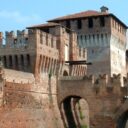
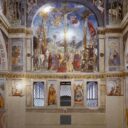
In an agricultural plain, full of farms interspersed with small villages, ruins of ancient monastic communities as well as other fine examples of medieval and Renaissance architecture, you may chance upon Soncino, a village in the province of Cremona. The village is surrounded by a ring wall and is laid out in a rectangular pattern, evidence of its Roman roots. It is full of enchanting buildings and churches, but if you pass outside the city wall, your attention will undoubtedly be captured by the Castle. This castle belonged to the Sforza family, who dominated the city’s history for a long period, and built this fort in the twelfth century....
Posted on Jun 17, 2013 in Artists, Masterpieces |
There is a scene in Paolo Sorrentino’s latest film, The Great Beauty, in which the main character is able to gain access to some of the most beautiful buildings in Rome at night, thanks to the help of a friend. One of these buildings is Palazzo Barberini, and, in a dream-like scene, the main character walks in front of Raphael’s Portrait of a Young Woman (La Fornarina), glancing at it with an enigmatic smile. This was certainly not a random choice by Sorrentino to include this painting in a film whose main theme is beauty. When looking at Raphael’s various masterpieces, what strikes you is their beauty and proportion,...
Posted on Jun 17, 2013 in Theatres |
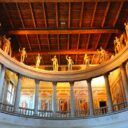
The concept of the ideal city first flourished in ancient times, but it was in the Renaissance that it became the focus of debate and came to be seen as the hub of human activity. This theme brought forth a series of proposals, some utopian in nature, conceptualized in famous paintings such as the one displayed at the National Gallery of Marche, in Urbino, while other proposals were more concrete and realistic, including Sabbioneta, a small town not far from Mantua. The city dates back to Roman times, but was transformed through a project by Duke Vespasiano Gonzaga who, from 1554 to 1591 (the year of his death), created...
Posted on Jun 13, 2013 in Turin |
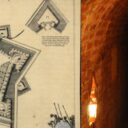
It may be hard to imagine today, but Turin was, at one time, a fortified city. The first stone of the fortification was laid in 1564, on the orders of Duke Emanuele Filiberto, who wished to protect his new capital. The Citadel was laid out in a pentagon shape, with a stronghold at every angle, and surrounded by a wide moat. In 1706, in the middle of the Spanish war of succession, the Citadel was attacked by more than forty thousand soldiers of Louis XIV, and was able to repel the assault due to the well-planned defense system beneath the city. In fact, 14 kilometers of tunnels had been dug,...
Posted on Jun 12, 2013 in Artists |
Some artists are gifted with an eclectic talent, capable of expressing itself in various creative outlets. This is certainly true of Giovanni Testori (1923-1993), novelist, poet, playwright, art critic and painter. He is one of the most important Italian cultural figures of the 20th century. The theme of Roserio’s God, his debut novel, concerns the amateurish cycling races in post-World War II Italy. His style of prose, expressionistic and agitated, makes the book pulsate with life, which many attribute to Testori’s original creative passion – painting. Therefore, in this article we will discuss Testori the painter, starting with his cycle dedicated to boxers. These are rather large canvases, depicting boxers...
Posted on Jun 11, 2013 in Villages, Villas |
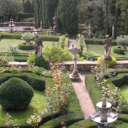
The hills of Fiesole, 8 kilometers (5 miles) north of Florence, immediately conjures delightful images. Lush vegetation, broken up by cypresses in strategic places, elegant villas with breathtaking gardens, panoramic views over the city of Giglio in all of its monumental beauty, parish churches, archeological sites, and abbeys that recount centuries-old stories, all characterized by the continual search for harmony and balance between man and nature. The echoes of the Fiesole hills and their fascination was so strong that at the beginning of the 1800s, the number of foreigners, particularly British, who took up residence in this area began to grow significantly. Most likely they were drawn by what...
Posted on Jun 6, 2013 in Brescia, Religious Monuments |
In the heart of Brescia, among the cobblestone lanes where you can still catch glimpses of what was once Augusta Brixia, the Roman city, lies one of the most remarkable Italian museums, a complex of buildings that houses nearly 3000 years of art and local history: the Santa Giulia Museum. As with other famous museums featuring vast collections, it is probably best to break your visit into 2 days, taking time to enjoy the various sections, with one day dedicated to the convent and the second to the city’s history. The restoration work that began in 1998 to most effectively display the more than 11,000 pieces of the collection...
Posted on Jun 5, 2013 in Bergamo |
In the age of globalization when you visit a city different from your, maybe beacuse of laziness or just to be sure, you end up to choose a fast food. In this manner you deny oneself one of the plasures of travel: to taste the typical flavours and the delicious food. How can a tourist do in Bergamo? What can you eat, but above all, where can you eat in Bergamo? The typical dishes, the famous “casonsei” and Polenta Taragna, that is with cheeses, can be found in almost every restaurant. In the Upper City, for instance, there are some typical places as La Colombina in Via Borgo Canale...
Posted on Jun 5, 2013 in Venice |
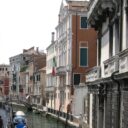
The labyrinth of alleys, squares, stairs, bridges and porticos, combined with the fog, the tricks of light reflected in the water, the abandoned areas, buildings that are mostly in ruins, the sudden glimpse of a gondola… all of these can play on your imagination in Venice, the city of mysteries par excellence. The Most Serene Republic of Venice made the ideal background for books or films brimming with secrets, and it saw some of its real intrigues turned into spy stories. Individuals like Casanova became symbols of the passions created by lies and trickery. Venice’s Carnival, one of the most famous in the world with its masks and costumes,...
Posted on Jun 5, 2013 in Bergamo |
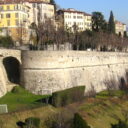
During the Venetian domination in the XVI century, it was decided to build new walls in order to safeguard the old village. The walls had to be arranged with a modern defense system and with ramparts staggered around a withdrawn wall. This change was made because of the new weapons capable to destroy the old walls. In order to build the fortifications a great number of existing buildings were destroyed, some were religoius and beloved by the population as the Church of Sant’Alessandro. As you can imagine this activity caused displeasure and aven censures on one side and on the other descrive in a definitive way the urban landscape...


 English
 Italian